If you are drawn to hillside homes, Orinda can feel like a world apart. The setting offers privacy, views, and a more natural backdrop than many flatter neighborhoods, but it also asks you to think more carefully about access, maintenance, and preparedness. If you are considering a move to Orinda or planning to sell a hillside property, understanding those tradeoffs can help you make a smarter decision. Let’s dive in.
Why Orinda hillside homes stand out
Orinda’s General Plan describes the city as semi-rural, with undeveloped ridgelines and hillsides, winding streets, visible open land near homes, and houses that are often modest in size compared with their lots. State Route 24 also runs through the city, which adds to the unique mix of scenery and access.
For you as a buyer or homeowner, that usually translates into a less uniform streetscape and a more site-specific living experience. One street may feel tucked into the trees, while another may open to broader views or sit closer to a ridgeline.
The city’s design standards also help preserve that character. Homes are expected to blend into the landscape and avoid impairing neighbors’ views, light, air, or privacy. That means the features many buyers love most about hillside living in Orinda are not just lifestyle perks. They are also part of the city’s planning priorities.
Lifestyle benefits of hillside living
Privacy feels more natural
One of the biggest draws of hillside homes is separation. Because lots can sit above or below the street and homes often follow the land rather than a rigid grid, you may find more visual privacy than in flatter areas.
That privacy often comes with a calmer, tucked-away feel. In Orinda, the semi-rural setting and limited land disturbance described in the General Plan reinforce that sense of retreat.
Views can be a major asset
Hillside properties often offer stronger view potential, whether that means layered greenery, ridgeline outlooks, or long sightlines across the surrounding terrain. In Orinda, scenic vistas are important enough to be protected through local review standards.
That matters if you are buying for lifestyle, but it also matters if you are selling. View orientation, outdoor usability, and how the home sits on the lot can shape buyer perception in a big way.
Architecture tends to feel more custom
Orinda’s landmark inventory reflects a broad architectural range, including work tied to Frank Lloyd Wright, Richard Neutra, and the Second Bay Tradition. The California Office of Historic Preservation also describes the Charles W. Merrill House as Spanish Colonial Revival with Monterey characteristics on a hillside site.
You do not need to own a landmark property to feel the effect of that history. In many hillside areas, homes are more likely to be custom or site-responsive rather than part of one repeated tract style.
Access matters more than you may expect
Daily driving takes more planning
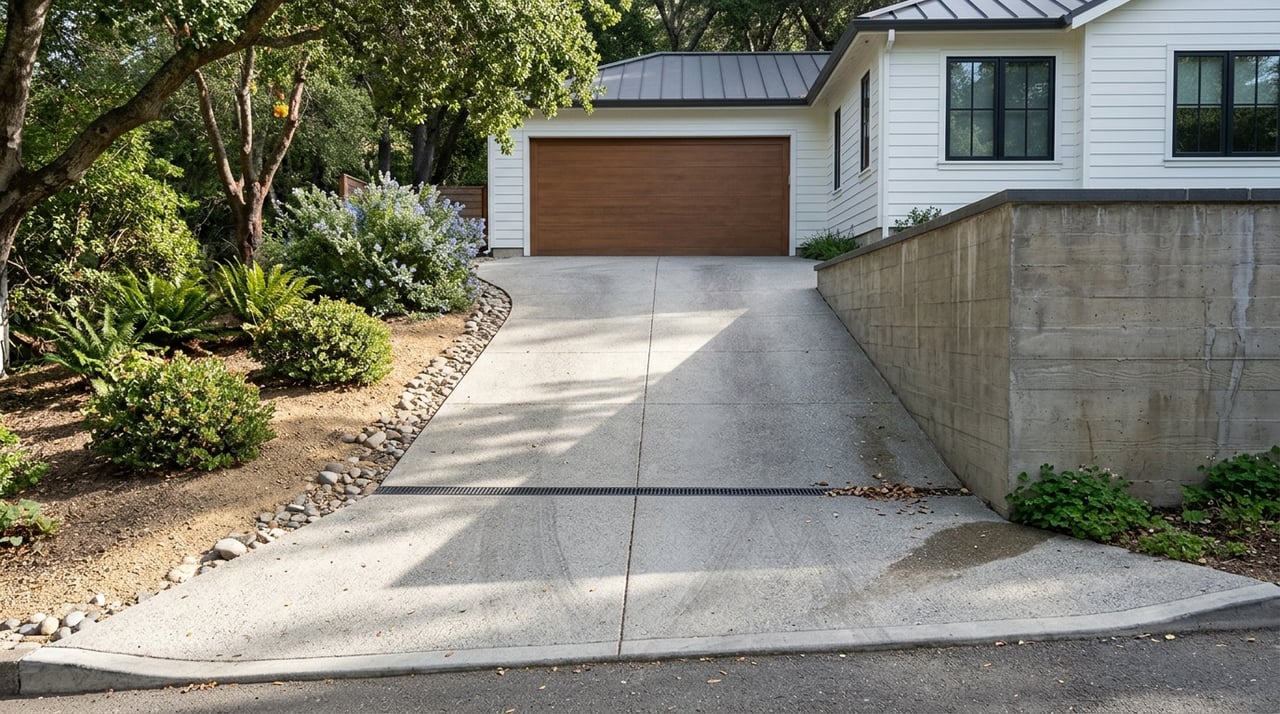
Hillside living can feel peaceful, but the logistics are different from a flatter, more grid-like area. Winding streets, elevation changes, and narrower approaches can affect how you think about guest parking, deliveries, and everyday convenience.
That is why practical questions matter. A steep driveway, limited turning space, or a complicated approach can shape daily life more than a beautiful listing photo suggests.
Commute options can improve the equation
Orinda sits on the BART line, and Orinda Station offers parking options. For many hillside homeowners, that can be an important part of the lifestyle equation, especially if you want a realistic plan that does not rely only on local roads.
Highway 24 also serves as both a transportation route and a scenic corridor within Orinda. In other words, access and setting are closely tied here.
Emergency exits deserve close attention
This is one of the most important tradeoffs to understand. The city uses the LADRIS evacuation viewer, which looks at roads, terrain, population patterns, ember casting, and other hazards to identify likely congestion points during an evacuation.
The city also advises residents to plan several evacuation routes from home and notes that Zonehaven AWARE is not a navigation tool. For you, that means a ridge or steep-lot setting may come with scenic isolation, but it can also require more serious exit planning.
Microclimate and lot conditions vary widely
Orinda has a dry-summer subtropical climate, often called Mediterranean, with cool, wet winters and warm, dry summers. The city’s terrain ranges from low valleys to rolling hills and crests around 1,000 to 1,100 feet.
Because of that, lot conditions can vary quite a bit. Slope, tree cover, sun exposure, shade, wind, and moisture can all feel different from one property to the next.
For you as a buyer, this is a reminder not to treat all hillside homes the same. Two homes in the same city can live very differently depending on orientation, grade, and vegetation.
Drainage and maintenance are part of ownership
Hillside lots need more oversight
In Orinda, developed parcels with an average slope greater than 15 percent are subject to a hillside grading permit for grading work. Drainage permits may also be required when work affects stormwater flow or watercourses.
City standards emphasize minimizing runoff and erosion, retaining vegetation, and preserving the natural appearance of hillsides and ridgelines. That makes sense visually, but it also shapes what ownership and future improvements can involve.
Maintenance goes beyond basic yard care
With a hillside property, upkeep often includes more than mowing and trimming. Slope stabilization, retaining wall maintenance, plant management, and monitoring how rainwater moves across the site can all become part of the routine.
If you are evaluating a home, it helps to think beyond finishes and floor plans. Site management can be just as important as the house itself.
Fire preparedness is part of the lifestyle
Orinda is in a Wildland Urban Interface community, and the city points residents to CAL FIRE hazard maps. CAL FIRE classifies Fire Hazard Severity Zones as Moderate, High, or Very High based on factors such as vegetation, terrain, fire weather, embers, and predicted flame length.
CAL FIRE also makes an important distinction between hazard and risk. Hazard reflects long-term physical conditions, while outcomes can change based on defensible space and ignition-resistant construction.
For you, that means wildfire readiness should be part of your property review from the start. It is not a side issue for many hillside homes. It is part of the ownership model.
The city also supports preparedness with regular pickup of fire fuels from residential properties and a matching grant of up to $1,000 for qualifying fuel-reduction work. Those programs can be useful when you are planning ongoing maintenance and mitigation.
Design review can affect future changes
Steep sites often require tailored design
Orinda’s hillside review standards explain that foundations on steep sites are generally cut into the hillside, floor levels step with the grade, and retaining walls are concealed or integrated into the structure. The natural appearance of ridgelines is also meant to be preserved.
That often creates homes with stronger architectural character and a better fit with the land. It can also make additions, expansions, or rebuilds more complex than they would be on a flat parcel.
Large projects may face more scrutiny
The city gives special review attention to large homes, steep development footprints, and small or narrow lots. If you are buying with renovation plans in mind, it is wise to look closely at the site’s constraints before assuming a project will be straightforward.
For sellers, this can also shape buyer interest. Well-documented improvements, thoughtful site planning, and a clear record of permits can help a property feel more understandable and more marketable.
Smart questions to ask before you buy
If you are seriously considering an Orinda hillside home, these questions can help you evaluate both lifestyle and logistics:
- How steep is the driveway?
- Is there adequate turning space or guest parking?
- How many usable ways in and out does the property have?
- What grading, drainage, or retaining wall permits are on file?
- Does the home sit in a ridgeline overlay area or a steeper design review category?
- What is the property’s fire hazard zone status?
- What mitigation work has already been completed?
- How are trash pickup, deliveries, and maintenance handled during wet weather?
What this means for buyers and sellers
For buyers, Orinda hillside homes can offer a beautiful combination of privacy, scenery, and architectural character. The key is to balance those benefits against practical realities like access, evacuation planning, drainage, and maintenance.
For sellers, these same homes often benefit from a clear, well-prepared presentation. When a property has unique site features, buyers respond best when the home’s lifestyle upside is easy to see and the practical details are easy to understand.
That is especially true in a market like Lamorinda, where design, setting, and presentation can strongly influence how a home is perceived. A hillside property often tells its story best when both the beauty and the logistics are handled thoughtfully.
If you are preparing to sell an Orinda hillside home or weighing whether one is the right fit for your next move, working with a local advisor who understands both presentation and property-specific details can make the process feel much clearer. To start the conversation, connect with Pablo Tiscareno.
FAQs
What makes Orinda hillside homes different from flatter homes?
- Orinda hillside homes often offer more privacy, stronger view potential, and more site-specific architecture, but they can also involve more complex access, drainage, maintenance, and emergency planning.
What should you check about access for an Orinda hillside property?
- You should look closely at driveway steepness, turning space, guest parking, local street approach, and how many practical routes in and out of the property are available.
What permits matter for Orinda hillside homes?
- Grading work on developed parcels with an average slope greater than 15 percent may require a hillside grading permit, and drainage permits may be needed when work affects stormwater flow or watercourses.
How important is wildfire preparation for Orinda hillside living?
- Wildfire preparation is a major part of hillside ownership because Orinda is in a Wildland Urban Interface community, and site conditions such as vegetation and terrain can affect hazard severity.
Can remodeling an Orinda hillside home be more complicated?
- Yes. Steep sites, ridgeline considerations, retaining walls, stepped floor levels, and local design review can make additions and rebuilds more complex than they would be on flatter lots.