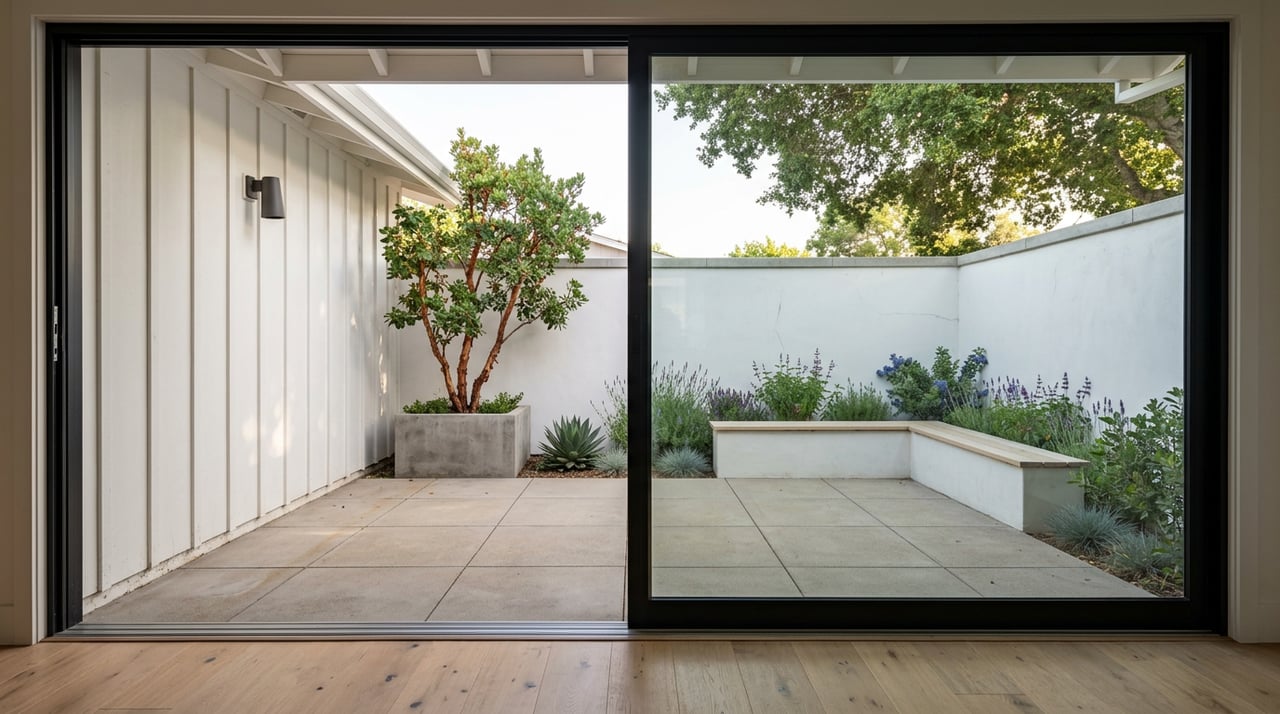
Torn between a yard and low-maintenance living in Concord? You’re not alone. With prices, HOA rules, and financing all in the mix, it can be tricky to see which option truly fits your budget and lifestyle. In this guide, you’ll compare real monthly costs, understand HOA and lending nuances, and learn the local factors that matter most in Concord. Let’s dive in.
Concord prices at a glance
Concord’s market sits in a middle band for the East Bay. Recent snapshots show a typical Concord home in the high $600s to low $700s range as of early 2026. Many attached options in Concord have traded in the low $200s to mid $300s in recent years, though there is wide variation by complex, size, and condition. The market has been competitive at times, so neighborhood-level comps are the best guide when you get serious about a property.
What really drives monthly cost
Price is only part of the picture. To compare a single-family home with a townhome or condo, add these line items into your monthly budget:
- Mortgage principal and interest
- Property taxes
- Homeowners insurance
- HOA dues, if any
- Utilities
- A maintenance reserve
In Contra Costa County, property taxes typically run about 1.1% to 1.35% of assessed value each year. You can find county guidance on how your tax bill is calculated on the Contra Costa site. See the local overview on property tax basics at the county’s page for Property Tax.
Quick monthly cost worksheet
Use this simple framework to compare options. Swap in your numbers and rate. The examples use round figures common in Concord to illustrate the tradeoffs.
| Line item | SFH example | Townhome example | How to estimate |
|---|---|---|---|
| Purchase price | $700,000 | $350,000 | Use list price or target offer |
| Mortgage P&I | Your lender calc | Your lender calc | Depends on rate and down payment |
| Property tax | ~$730 per month | ~$365 per month | Price x 1.25% per year divided by 12. Local ranges are about 1.1% to 1.35%. Learn more at the Contra Costa County Property Tax page. |
| Homeowners insurance | Varies | Varies | SFH often higher than condo. See the Insurance Information Institute’s homeowners guide. |
| HOA dues | $0 | $370 per month | Concord examples range widely. Some are near $100, others $285 to $518, depending on services. |
| Maintenance reserve | ~$580 per month | ~$145 per month | SFH: budget about 1% of value per year. Attached: interiors still need reserves, but exterior items may be covered by the HOA. |
| Utilities | Varies | Varies | Attached homes can be more efficient. Check what utilities the HOA covers in the CC&Rs. |
How to use this: plug in your actual down payment, interest rate, tax rate, HOA dues, and a maintenance target. Run side by side to see your true monthly carrying cost.
HOA dues in Concord
HOA fees in Concord vary by community and what they include. Local listings show examples like $97, $285, $370, and $486 to $518 per month. Lower fees often mean fewer amenities or higher owner responsibility, while higher fees might include water, trash, landscaping, exterior insurance, roof reserves, and amenities. Always review what is covered and whether dues are projected to rise.
Maintenance and insurance differences
- Single-family homes: You cover everything inside and out, from roof and siding to yard and systems. A common rule of thumb is about 1% of home value per year, and more for older homes.
- Townhomes and condos: The HOA usually handles the exterior, roof, and common areas. You still need to budget for walls-in repairs and your share of big projects through reserves or special assessments.
- Insurance: SFH owners typically carry an HO-3 policy that covers the structure, contents, and liability. Condo and townhome owners usually have an HO-6 policy that covers interior finishes, personal property, liability, and loss-assessment coverage. Confirm whether the master policy is bare-walls or all-in and the size of the master deductible. These details affect your premium and exposure. For a clear primer, review the Insurance Information Institute’s homeowners handbook and note how lenders evaluate master policies in Fannie Mae’s project review guidance.
HOA rules, reserves, and assessments
California’s Davis-Stirling Act governs common interest communities. It sets disclosure rules, budgets, reserve study standards, meetings, and owner rights. When you consider a townhome or condo, ask for the full HOA resale packet early. You can explore the statute summary and owner rights in the Davis-Stirling Act resource.
Reserves matter. Associations must study long-term capital needs and disclose reserve funding. If reserves are underfunded, dues increases or special assessments can follow. Review the reserve study, current percent-funded, and recent project history. A helpful overview of reserve studies and what to look for is available from a California HOA law resource.
Laws evolve. Recent changes under Davis-Stirling, including AB 130 in 2025, adjusted some governance and enforcement provisions. Another update, SB 900 effective 2025, expanded emergency powers for critical repairs, which can affect how and when boards levy emergency assessments. For a snapshot of recent Davis-Stirling updates, read this legal briefing and confirm current rules with your agent or a California HOA attorney as needed.
Financing and resale basics
Project approvals can limit loan options
Condo and townhome financing requires an extra layer: the project review. Conventional lenders look at owner-occupancy ratios, budget health, reserves, delinquencies, insurance, and litigation to decide if a unit is eligible for standard financing. If a project fails review, buyers may face higher down payments or limited loan programs. You can see how this works in Fannie Mae’s project review guide. FHA and VA also have approval processes, including single-unit approvals in some cases. Ask your lender early whether the project is eligible under your loan program. FHA’s resource hub is a good starting point for how approvals work.
Resale and buyer pool
When a project is not eligible for common loan programs, the buyer pool shrinks. That can slow sales or put pressure on pricing. HOA dues trends, master policy deductibles, and reserve health also influence marketability. Before you write an offer, look at days on market and list-to-sale ratios for similar units in the same complex and nearby neighborhoods.
Lifestyle and location tradeoffs in Concord
- Commute and transit: Proximity to downtown and the Concord BART station is a major draw. Many buyers accept attached living for an easier commute to Oakland or San Francisco. See the city’s Complete Streets study overview for how transit and walkability shape central Concord.
- Neighborhood patterns: Downtown and areas around Todos Santos tend to offer more attached options and walkable amenities. Farther out, you’ll find more traditional single-family tracts and larger lots. Compare within micro-areas rather than citywide.
- Schools and space: Concord is served by Mt. Diablo Unified School District. If yard size and private outdoor space rank high for you, a detached home may rise to the top. If a shorter commute and simplified maintenance lead your list, a townhome or condo near BART can be a smart fit. Keep school boundaries and your daily routine in mind as you evaluate locations.
Which one fits you best
Choose a single-family home if you want:
- A private yard and more separation from neighbors
- Full control over exterior finishes and landscaping
- Fewer governance layers and no monthly HOA dues
- Long-term value in a traditional suburban setting
Choose a townhome or condo if you prefer:
- Lower entry price and a simpler monthly budget
- Less hands-on maintenance, with exterior items handled by the HOA
- Proximity to BART, downtown shops, and services
- Energy efficiency from shared walls and potentially included utilities
Before you tour or write an offer
Use this quick checklist to save time and avoid surprises.
- For townhome or condo listings:
- Request the HOA packet: current budget, reserve study, last 12 to 24 months of meeting minutes, CC&Rs, bylaws, rules, and master insurance declarations. The Davis-Stirling Act outlines required disclosures and owner rights.
- Ask about pending or recent special assessments, major projects, and litigation. Review the reserve percent-funded and the master policy deductible.
- Confirm rental rules and current owner-occupancy ratios, which affect financing.
- For single-family listings:
- Ask for recent maintenance history and ages of major systems. Budget around 1% of purchase price per year for routine upkeep, and more for older homes.
- Prioritize inspections for roof, HVAC, sewer or septic if applicable.
- For both property types:
- Run a full monthly number: mortgage P&I, property taxes at about 1.1% to 1.35% of assessed value, homeowners insurance, HOA dues if any, utilities, and a maintenance reserve. See Contra Costa County’s Property Tax overview for rate context.
- Talk to your lender early about condo or project approvals for conventional and FHA or VA loans. Start with Fannie Mae’s project review guidance and FHA’s resource hub.
- Clarify insurance responsibilities. Review whether the master policy is bare-walls or all-in and the master deductible size so you can tailor your HO-6 coverage. Lenders look closely at these details in project reviews.
Ready to compare specific homes in Concord side by side and run your real monthly costs? Reach out. As a design-forward, concierge East Bay brokerage, we help you weigh location, lifestyle, and long-term value, then guide you from first tour to a polished, low-stress closing. Connect with Pablo Tiscareno to start a clear, data-backed plan for your next move.
FAQs
Are townhomes cheaper than single-family homes in Concord?
- Often yes on purchase price, with many attached options trading lower than detached homes. Always compare the full monthly cost, including HOA dues, taxes, insurance, and maintenance.
How do HOA fees in Concord typically work?
- They vary widely by community and services provided. Review the budget, reserve study, and minutes to understand current dues, likely increases, and special assessment risk.
Will HOA dues go up a lot over time?
- They can rise if reserves are underfunded or major projects are due. The best predictors are the reserve study, percent-funded, and recent budget history. See this California overview of HOA reserve studies.
Is insurance usually cheaper for condos than houses?
- HO-6 condo policies are often cheaper than HO-3 house policies because the master policy covers the exterior, but condo owners can face loss assessments and master deductible exposure. Learn the basics in this homeowners insurance guide.
How do property taxes work in Contra Costa County?
- Expect about 1.1% to 1.35% of assessed value each year, plus voter-approved items. You can review local property tax details on Contra Costa County’s Property Tax page.
What should I check about a condo project before I make an offer?
- Ask your lender about conventional and FHA or VA eligibility, then request the full HOA packet. Review reserves, meeting minutes, CC&Rs, and the master insurance policy. Start with Fannie Mae’s project review overview and the Davis-Stirling Act resource for owner disclosures.