Ever wonder what a typical Saturday in Orinda feels like? Picture tree-lined streets, a quick coffee near the BART station, kids in soccer jerseys at Community Park, and an evening movie under the glowing Orinda Theatre marquee. If you are weighing a move within the Bay Area, you are likely balancing schools, commute time, and a quieter pace without losing access to San Francisco and Oakland. This guide walks you through daily life in Orinda from a local’s lens, so you can decide if it fits your routine and your next chapter. Let’s dive in.
Orinda’s daily rhythm
Orinda moves at a calmer, suburban tempo. Neighborhoods are green and hilly with winding streets and lots of outdoor time built into the day. You will see youth sports, library activities, and school events filling the calendar.
It is a small city by population, with about 19,500 residents and a very high share of owner-occupied homes. According to the U.S. Census, Orinda’s homeownership rate exceeds 90 percent and household incomes are among the highest in California, which supports well-kept properties and strong community involvement. You can review the latest population, income, and housing figures on the Census QuickFacts page for Orinda.
Schools and family life
Families often choose Orinda for its K–12 pathway. The Orinda Union School District runs four elementary schools and one intermediate school. District pages outline programming, accountability reports, and the culture of active parent participation. Learn more on the Orinda Union School District site.
For high school, Orinda feeds into Acalanes Union High School District. Miramonte High School sits in town within that district. District resources highlight strong college-prep metrics, AP participation, and graduation outcomes across AUHSD. Explore the Acalanes Union High School District overview.
Day to day, you will notice that school events and volunteering are part of the social fabric. Parent-led support through the Orinda Network for Education helps fund enrichment and programs across local campuses.
Outdoor life and weekend plans
Access to open space shapes how locals spend free time. The Lafayette Reservoir is minutes away with a family-friendly loop, paddleboats, and picnic spots. Weekday mornings and after-school hours often include walks, jogs, and playground time here.
Beyond the reservoir, regional parks and ridgelines give you miles of hiking and horseback options. Briones and nearby East Bay trails offer rolling views and a sense of escape without a long drive.
In town, the Orinda Community Park and Community Center create a steady community calendar. Summer concerts, youth sports, classes, and library-adjacent activities make it easy to connect with neighbors. Check the city site for details on Orinda Community Park and programs.
Arts, culture, and local gatherings
For a small city, Orinda has an outsized cultural footprint. The historic Orinda Theatre is a local landmark and gathering spot, from special screenings to community film nights. Event listings for the theatre and the Saturday farmers market appear on the downtown association’s page. Browse current happenings through the Downtown Orinda events calendar.
Summer evenings also bring picnic crowds to the Bruns Amphitheater for California Shakespeare Theater. The setting, tucked into the eucalyptus-lined hills, is one of the East Bay’s most memorable outdoor venues. Read a recent local feature about Cal Shakes and its hillside home at the Bruns Amphitheater.
Dining, shopping, and errands
Orinda Village around Orinda Way is compact. You will find cafés, a handful of restaurants, personal services, and that weekly farmers market. For bigger shops and a wider range of grocery or retail, many residents pop over to Lafayette or Walnut Creek. The routine is simple: quick local errands in the village, larger trips a few minutes away.
Getting around and commuting
You have two main commute modes: BART or the Highway 24 corridor.
- BART access: The Orinda BART station sits in the village. In typical service patterns, Orinda to Embarcadero runs about 25 to 30 minutes on the train. Use BART’s schedule and trip planner to check exact departures.
- Station parking: Like many East Bay stations, BART parking demand is high and lots can fill early. Waitlists for monthly permits and early morning arrivals are common patterns across suburban stations. A widely reported story about permit demand highlights how competitive these spots can be. For context, see this regional piece on BART parking permit pressures.
- Driving: State Route 24 over the Caldecott Tunnel is the primary link to Oakland and San Francisco connections. Traffic incidents or peak-hour congestion can create unpredictable delays. For an example of how quickly conditions can change, see local coverage of a Highway 24 closure near Orinda.
Outside the compact downtown, Orinda is largely car dependent. Walk Score characterizes many residential streets as low-walkability areas where most errands require a car. You can review a central Orinda address for reference via Walk Score’s Orinda page.
Housing styles and neighborhoods
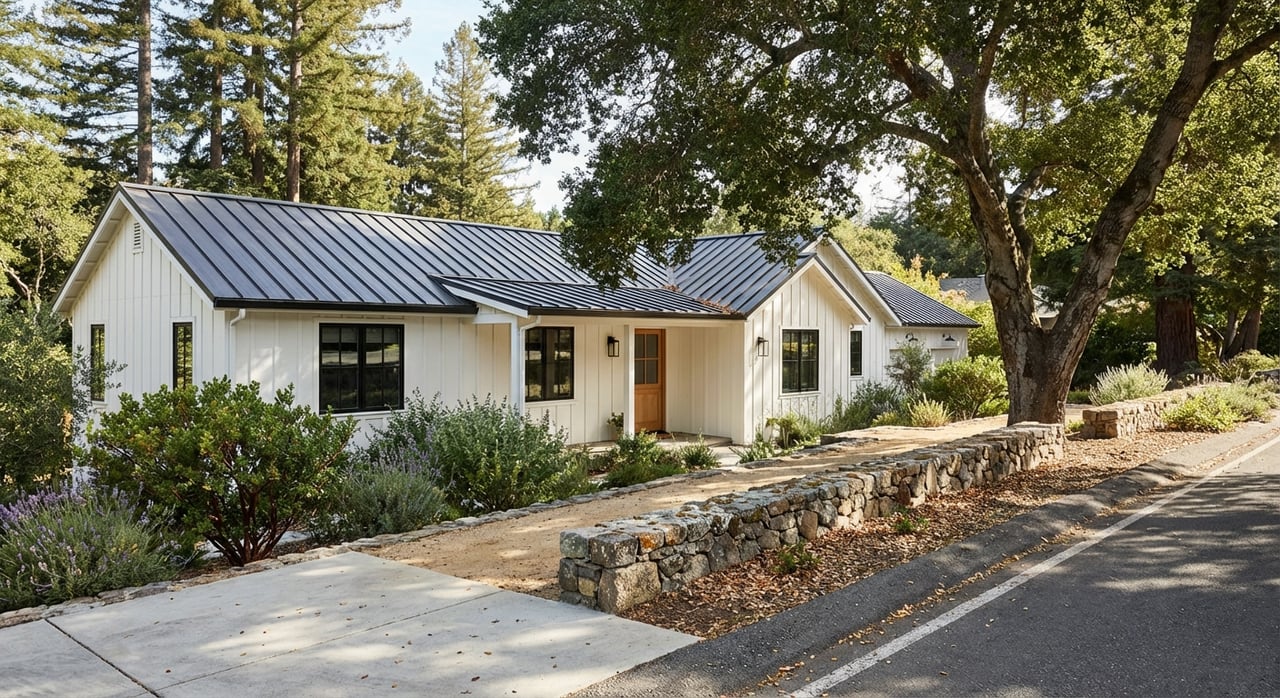
Orinda’s housing is diverse, with a strong mid-century and California-ranch thread. You will see:
- Mid-century ranches and updated traditionals in neighborhoods like Del Rey, Glorietta, and Ivy Drive.
- Larger lots and estate-style homes in areas such as Sleepy Hollow and El Toyonal, often on hilly terrain with valley or bay views.
- Newer construction and amenity-focused living in Wilder, which blends Craftsman, Adobe Ranch, Spanish-influenced, and contemporary designs. Get a sense of how builders approached indoor-outdoor life in this master-planned setting in a Wilder community feature.
Topography is part of the experience. Hillside lots, view corridors, and privacy from mature trees are common. Many homes emphasize indoor-outdoor flow with decks and patios that settle into the landscape.
Cost of living and market feel
Orinda is firmly an upscale market, supported by high incomes and high ownership. The Census reports a median household income above the survey ceiling of $250,000 and a per-capita income around $139,500. See the Census QuickFacts for Orinda for the underlying data.
Home prices reflect that affluence. Inventory is often lean and competition can tighten or ease month to month. If you are planning a move, monitor current listings and recent closings closely and expect meaningful differences by neighborhood, lot, and level of updating.
Safety and preparedness
Violent-crime rates in Orinda are low compared with national averages, and property crime tends to be the most common category to track. You can review overall crime indices and trends with NeighborhoodScout’s Orinda profile. As with any Bay Area hillside community, be mindful of vegetation management, seismic readiness, and seasonal maintenance.
Who Orinda fits best
- You want strong K–12 options and an engaged school community.
- You prefer a quieter, tree-filled setting near major open space.
- You like the idea of a small village center with easy access to broader shopping in nearby towns.
- You plan to commute by BART or you can work flexibly around Highway 24 peak hours.
Tradeoffs to weigh
- Car dependence is real outside the downtown core.
- BART station parking can be competitive in the morning.
- Hillside homes invite attention to fire safety and home maintenance.
- Housing is expensive, and move-in-ready homes can attract strong interest.
Tips for a smoother transition
- Test your commute: Try BART and a peak-hour drive to compare door-to-door time. Use BART’s trip planner to build a real schedule.
- Map your daily loop: Identify school drop-offs, after-school activities, and your preferred grocery route to Lafayette or Walnut Creek.
- Walk the neighborhoods: Notice slope, sun pattern, and privacy. Check how outdoor spaces connect to living areas.
- Plan for prep if you will sell: Thoughtful updates and professional staging help listings stand out in a design-conscious market.
Thinking about buying or selling
If Orinda’s rhythm matches your goals, the right guidance can help you act with confidence. For buyers, clarity on commute, schools, and lot specifics will narrow your search quickly. For sellers, a design-forward strategy with curated staging, small improvements, and polished media can unlock premium results with less stress.
When you are ready to talk through timelines, pricing, and presentation, reach out. Pablo Tiscareno offers complimentary staging and a concierge plan to prepare, market, and negotiate your sale so you can focus on your next chapter.
FAQs
Is Orinda a good fit for school-focused households?
- Orinda feeds into respected public schools, with OUSD for K–8 and AUHSD for high school; district pages outline strong college-prep and enrichment supported by active parent organizations. See OUSD and AUHSD.
How long is the Orinda to San Francisco commute?
- The Orinda to Embarcadero BART ride typically runs about 25 to 30 minutes, with total door-to-door time often closer to 45 to 60 minutes once you include station access and last mile. Check BART schedules.
What is the downtown Orinda experience like on weekends?
- Expect a compact village feel around Orinda Way with cafés, services, the Saturday farmers market, and the historic Orinda Theatre anchoring community events; browse Downtown Orinda events.
Will I need a car to live in Orinda?
- Most households use a car for daily errands since many neighborhoods are not highly walkable; the area around the BART station is the most walkable. See Walk Score’s Orinda reference.
How safe is Orinda compared with other cities?
- Overall violent-crime rates are low relative to national averages, while theft and other property crimes are the more common reports; review summary data at NeighborhoodScout’s Orinda page.
What kinds of homes are most common in Orinda?
- You will find mid-century ranches, updated traditionals, hillside estates, and newer construction in Wilder that leans into indoor-outdoor living; see a builder overview of Wilder’s design mix.